Introduction
Art has long been understood as a means of expressing human emotions, ideas, and lived experience. From painting and music to theater and dance, artistic practices in their various forms have offered deeper insights into social, cultural, and individual realities. In the contemporary world, however, art is no longer confined to individual expression or aesthetic production alone. It increasingly appears as a collective and social process. In this context, events emerge as a form of social art—settings in which not only artists but also audiences actively participate in the creation and experience of art. This article examines event art and explores its significance in the contemporary world from social, cultural, and philosophical perspectives.
The Concept of Event Art: Art Situated in Time and Place
Event art refers to a form of artistic practice in which the creation of the artwork unfolds simultaneously with a social, cultural, or even political event, taking place collectively and in real time. In this form of art, time and place are central, and the artwork is understood not as a permanent, static object but as a temporary and ephemeral experience.


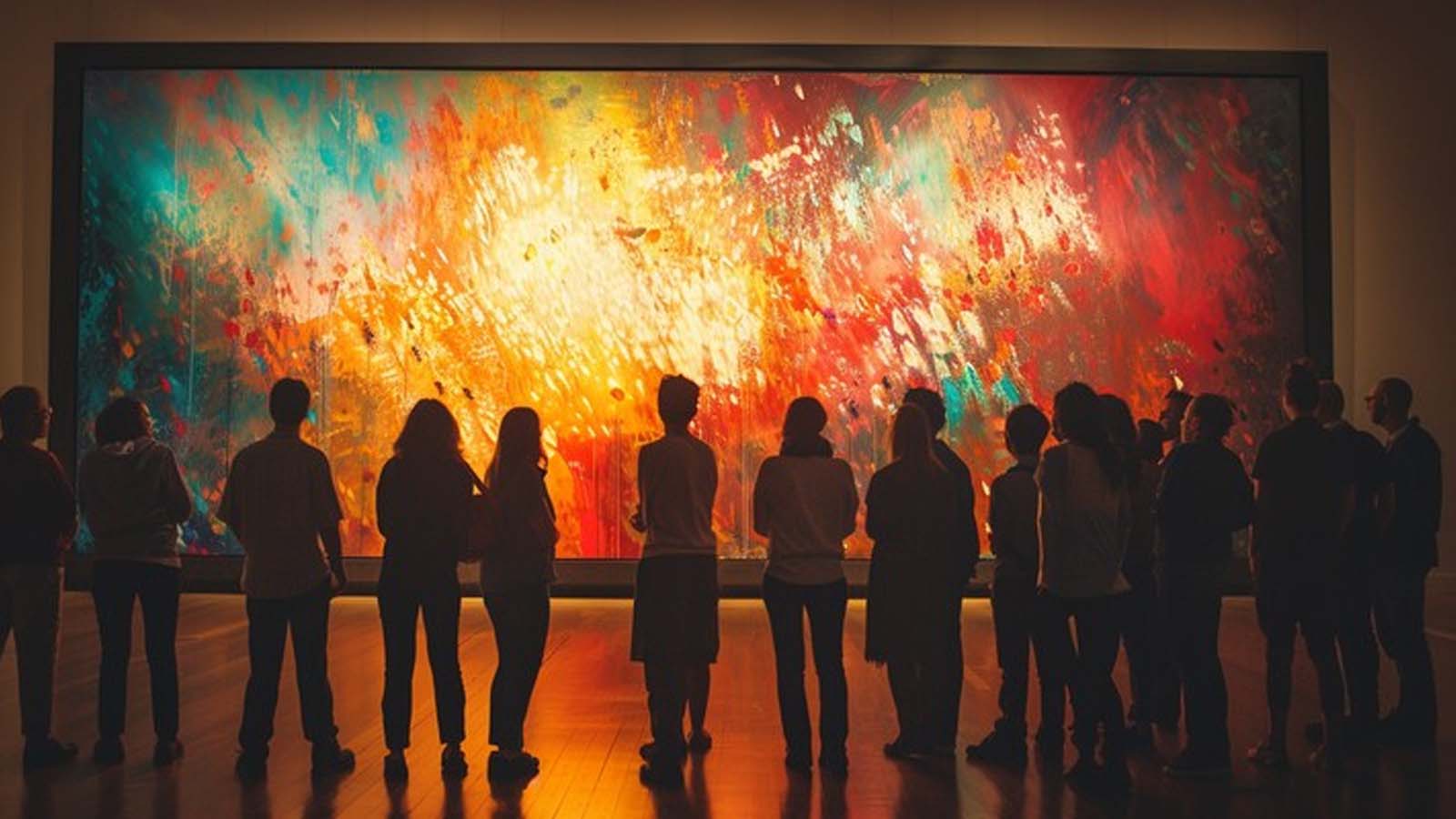
For this reason, event art differs fundamentally from traditional artistic forms. Here, art is not treated as a tangible object or a finished product, but as a social and interactive process. Such events may include live performances, art festivals, interactive exhibitions, performance theater, or artistic workshops in which artists and audiences are jointly immersed in an artistic and social experience.
Event Art in the Contemporary World: Shared and Collective Experience
In a world increasingly shaped by globalization and the rapid expansion of digital communication, event art has gained particular prominence. Unlike traditional art forms that typically unfold in fixed settings with limited reach, event art becomes an immediate and collective experience. Audiences are not merely spectators; they perceive themselves as participants in both the creation and the lived experience of the artwork.
Through the use of new media and digital platforms, event art has expanded access to artistic experiences for broader and more diverse audiences. In effect, it can become a global experience, enabling individuals from different parts of the world to participate and feel connected to a shared artistic moment.
Event Art and the Meaning of Time and Space
One of the defining characteristics of event art is its deep reliance on time and place. Unlike static artworks that can be viewed repeatedly in different contexts, event art is inseparable from the specific moment and location in which it occurs. This dependency makes the artistic experience unique and fleeting. A live performance or an art festival, for example, takes place at a particular time and in a particular setting, and each moment offers an unrepeatable experience for its audience.
This quality positions event art as a living and dynamic form of art. Each event is singular and cannot be precisely reproduced. As a result, event art is widely understood as an experiential and interactive practice in which the audience becomes an integral part of the artistic process.
Social and Cultural Impacts of Event Art
Event art carries significant social and cultural implications. It operates not only as an individual experience but also as a collective phenomenon with substantial transformative potential. Event art can function as a medium for expressing collective identities, engaging in social critique, and even fostering cultural change.
In many art festivals and live performances, artists draw on social, political, and cultural themes to raise awareness and stimulate collective reflection. Such events can generate spaces for public dialogue and debate, thereby influencing social attitudes, beliefs, and behaviors. In this sense, event art acts as a catalyst for social and cultural transformation and plays an active role in shaping contemporary public discourse.
Challenges and Opportunities in Event Art
Despite its powerful social and collective dimensions, event art also faces practical challenges. One of the primary difficulties lies in managing large-scale and continuous audience interaction. Because event art depends heavily on participation and presence, coordinating engagement and managing diverse audiences can be complex.
At the same time, event art offers unique opportunities for innovation, particularly through the use of emerging technologies. Tools such as augmented reality, virtual reality, and digital media can significantly enhance the artistic experience, making it more immersive and inventive. These technologies allow artists to move beyond traditional constraints and create multidimensional, interactive experiences.
Conclusion: Event Art as a Vehicle for Change
Ultimately, event art has emerged as one of the most significant contemporary forms of social art. By drawing on collective spaces and human interaction, it creates distinctive and ephemeral experiences with lasting social and cultural impact. Through the integration of new technologies, event art also enables these experiences to be shared more widely and on a global scale. As a result, event art should be understood not only as a mode of artistic expression, but as a powerful social and cultural instrument for change and transformation in the contemporary world.